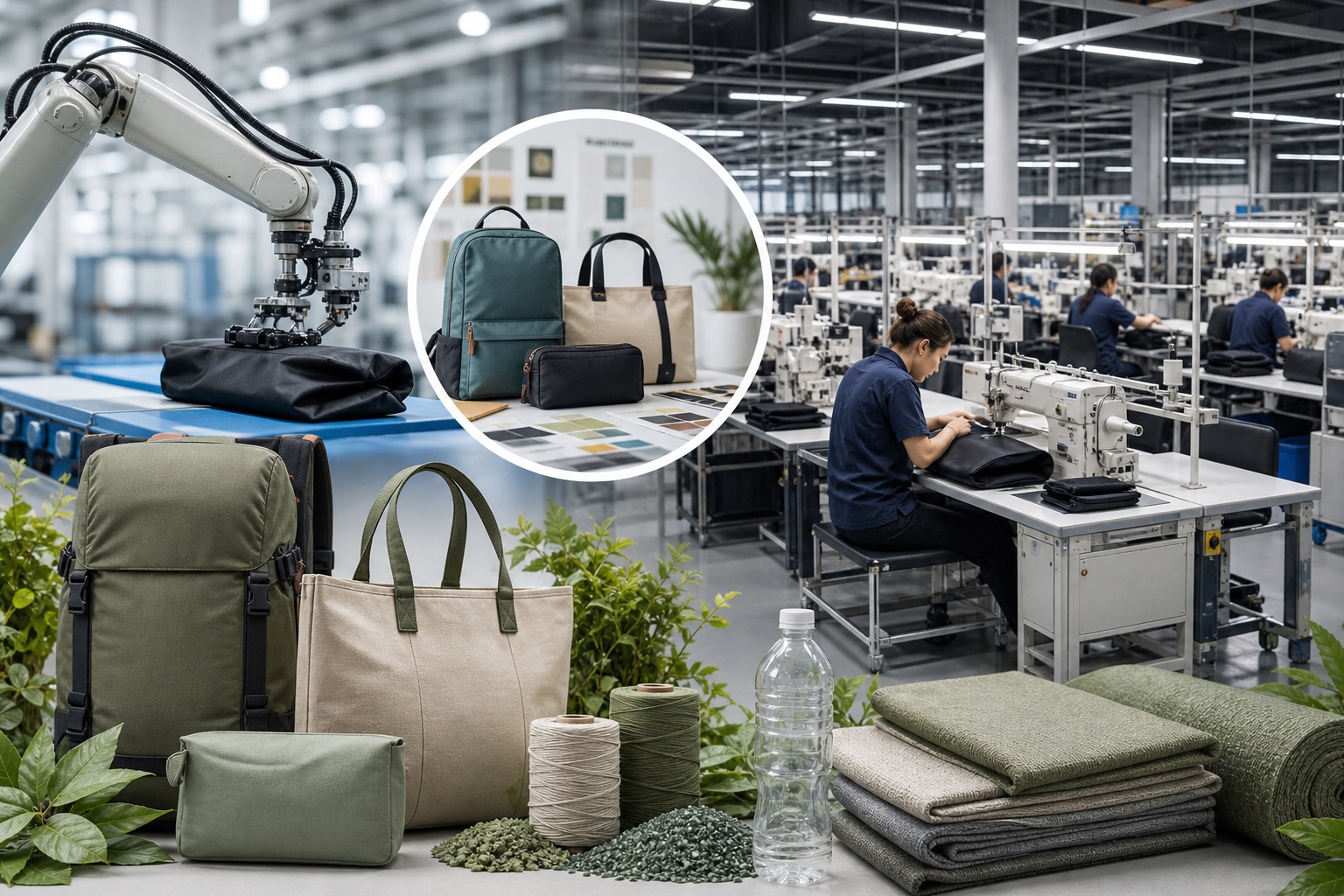
Launching a single bag SKU is a project. Building a product line is a strategy. Wholesale buyers, private-label brands, and distributors who treat each order as an isolated transaction miss the compounding benefits of a planned collection—consistent branding, efficient factory utilization, lower per-SKU costs, and retail presentations that drive larger orders from buyers.
This guide walks through product line planning for handbags, backpacks, and luggage collections sourced from China. It covers SKU architecture, price tiering, seasonal calendars, MOQ strategy, and how to coordinate with factories for sustainable growth across multiple seasons.

Start with Market Positioning, Not Product Ideas
Successful bag lines begin with a clear position in the market. Before sketching products, define:
- Target customer: Corporate buyer, boutique retailer, outdoor enthusiast, commuter professional, student
- Price band: Wholesale price range per SKU (e.g., $8–$15 promotional, $20–$45 mid-market, $50–$120 premium)
- Brand story: What makes your line different—sustainability, durability, fashion-forward design, functional organization
- Channel: Trade show wholesale, Amazon FBA, corporate gifting, direct retail, distributor network
Your positioning determines material tier, hardware quality, packaging level, and factory selection. A premium leather handbag line and a promotional tote program should not share the same factory or QC standard—they may coexist under one brand umbrella but require separate production tracks.
SKU Architecture: Building a Cohesive Collection
A well-architected product line covers customer needs without redundant overlap. Use a matrix approach organizing by function and size tier:
| Category | Entry SKU | Core SKU | Hero SKU |
|---|---|---|---|
| Handbags | Crossbody pouch ($15–$22) | Everyday tote ($28–$40) | Structured satchel ($55–$85) |
| Backpacks | Daypack 15L ($18–$25) | Commuter 25L ($30–$45) | Travel pack 40L ($50–$75) |
| Luggage | Weekender duffel ($35–$50) | Carry-on 20" ($60–$90) | Checked 28" ($80–$120) |
| Accessories | Pouch / wallet ($8–$12) | Laptop sleeve ($15–$25) | Garment bag ($30–$45) |
The Rule of Three
Retail and wholesale buyers expect choice without overwhelm. For each category, plan three tiers: an entry price point that drives volume, a core SKU that defines your brand, and a hero product that showcases craftsmanship and margin. Launching with 8–12 SKUs across 2–3 categories is manageable for a first season. Expand to 20–30 SKUs once initial sell-through data confirms what resonates.
Price Ladder and Margin Planning
Each SKU in your line should occupy a distinct price point with logical step-ups. Gaps that are too small confuse buyers; gaps that are too large leave money on the table.
- Target 2.2–2.8x markup from FOB landed cost to wholesale price
- Retail price should be 2.0–2.5x wholesale for standard wholesale-to-retail relationships
- Hero SKUs carry higher margin (3.0x+) to subsidize entry-tier volume drivers
- Accessories serve as add-on purchases with strong margin and low freight cost per unit
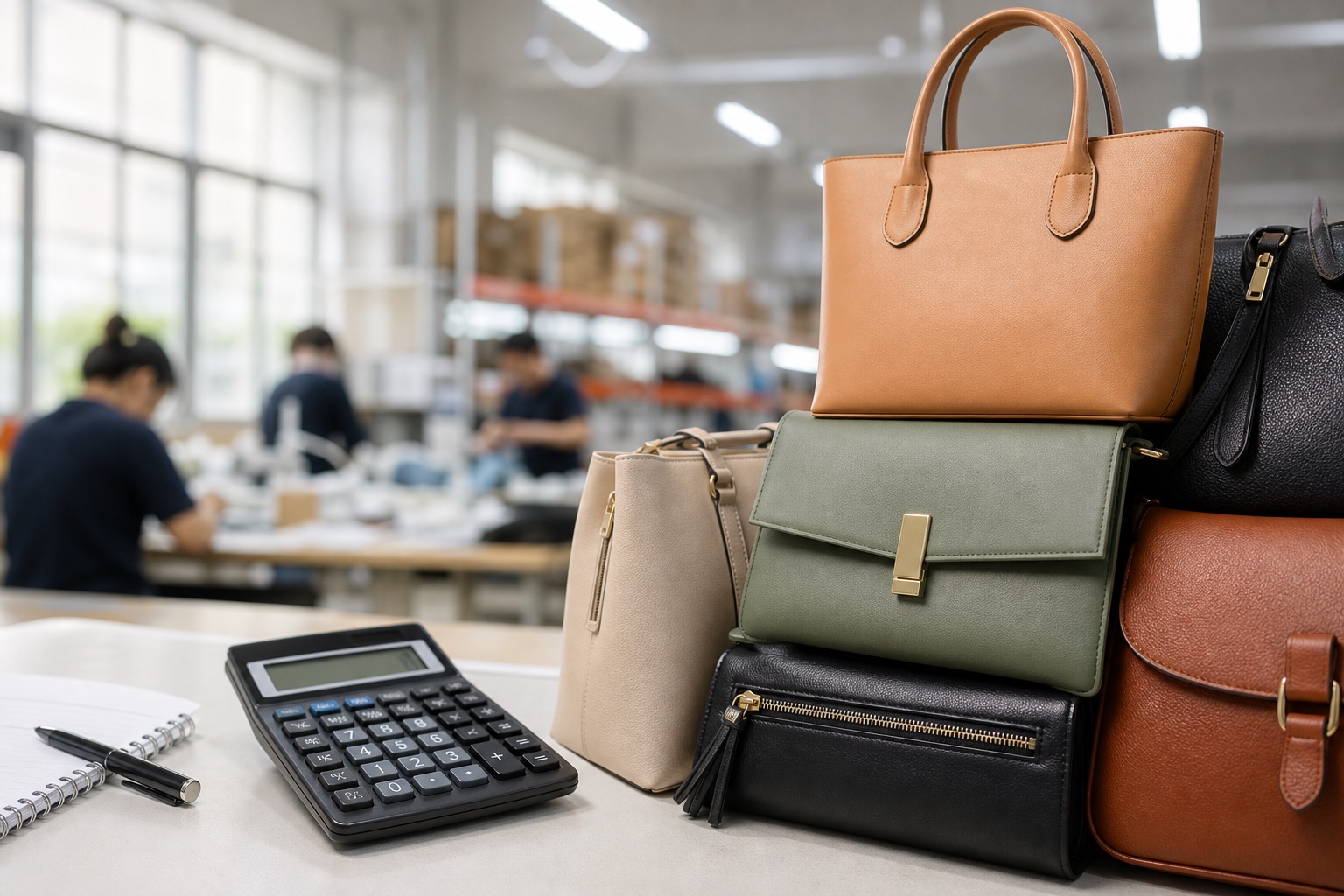
Build a line sheet spreadsheet listing every SKU with FOB cost, estimated landed cost, wholesale price, suggested retail, and gross margin. Review margin at the line level—not just per SKU—to ensure the collection is commercially viable even if one or two SKUs underperform.
Color and Material Strategy Across SKUs
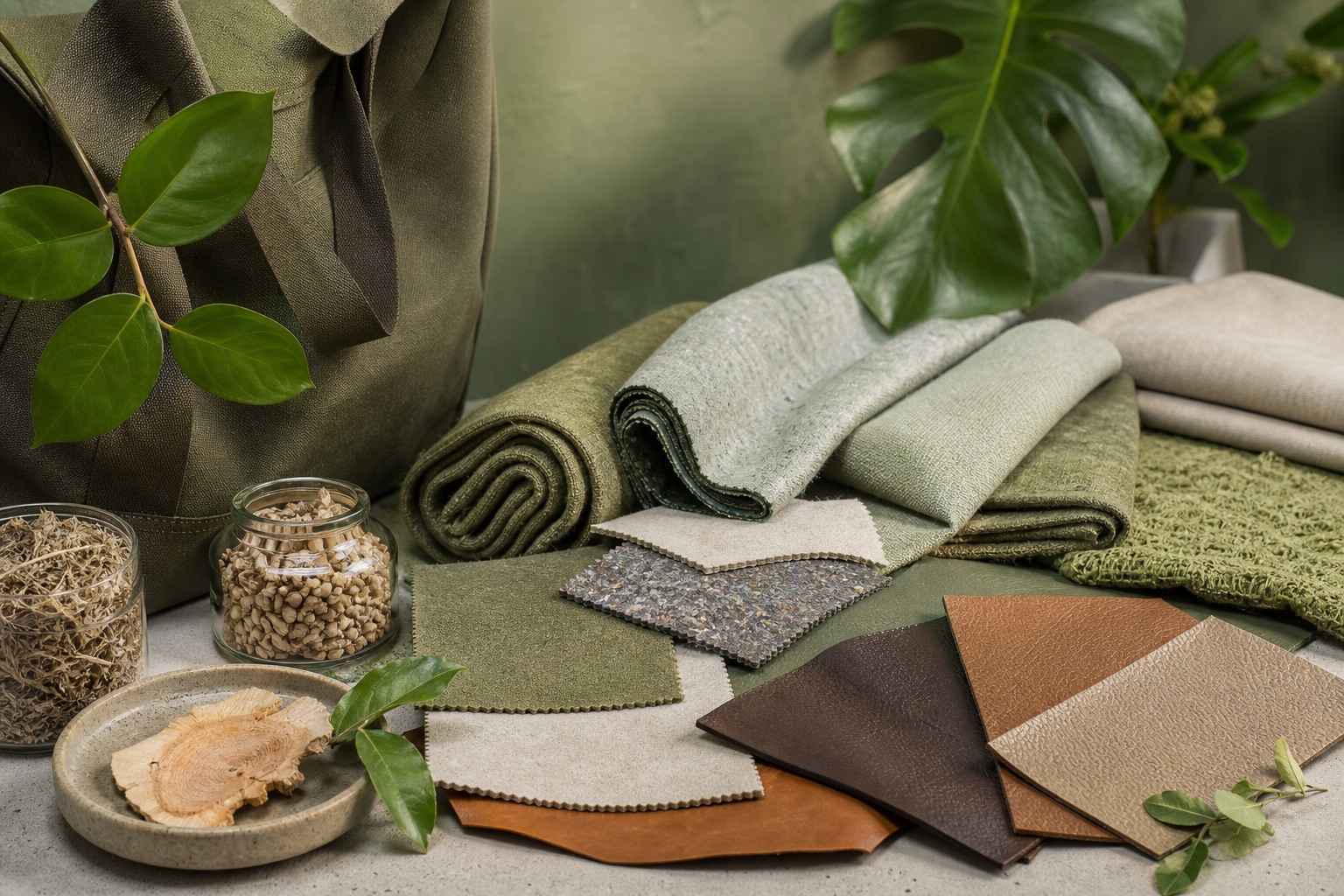
Consistency across a product line reduces factory complexity and strengthens brand recognition. Plan a seasonal color palette of 3–5 colors applied across multiple SKUs rather than unique colors per product.
Example seasonal palette: Black, Navy, Tan, Sage Green, Burgundy. Every bag in the line offers at least 3 of these colors. Black and Navy are evergreen; seasonal colors rotate each quarter. This approach consolidates material orders, reduces fabric MOQ pressure, and gives retail buyers a cohesive wall presentation.
Material Tiering by Price Point
| Price Tier | Body Material | Hardware | Lining |
|---|---|---|---|
| Entry ($8–$20 wholesale) | 600D polyester, 10 oz canvas | Standard zinc alloy, SBS zippers | 210D polyester |
| Core ($20–$45 wholesale) | 900D nylon, 12 oz canvas, mid-grade PU | Brushed nickel, YKK zippers | Printed polyester or cotton |
| Hero ($45–$120 wholesale) | Full-grain leather, premium microfiber PU | Custom metal logo, YKK waterproof | Microfiber suede or branded cotton |
Seasonal Calendar and Launch Timing
Bag buying follows seasonal cycles aligned with retail selling seasons. Plan production backward from target delivery dates:
- Spring/Summer delivery (Jan–Mar arrival): Start development 6–8 months ahead (Jun–Aug prior year)
- Fall/Holiday delivery (Jul–Sep arrival): Start development 6–8 months ahead (Jan–Mar same year)
- Chinese New Year buffer: Add 3–4 weeks to all lead times for orders crossing January–February
Present new lines at trade shows (Canton Fair, ASD Market Week, TFWA) 1–2 seasons before delivery to secure wholesale pre-orders. Use pre-order data to right-size production quantities and reduce overstock risk.
MOQ Strategy for Multi-SKU Lines
MOQ is the biggest constraint when planning a product line. Factories set MOQ per SKU per color—500 units of a tote in black is a different production run than 500 in navy. Line planning must balance assortment breadth against MOQ reality.
Strategies to Manage MOQ Across a Line
- Shared materials: Use the same fabric and hardware across multiple SKUs to aggregate material purchasing power
- Color consolidation: Limit initial colorways to 2–3 per SKU; add colors in reorder based on sell-through
- Platform designs: Same body pattern with different trim, logo, or interior layout creates distinct SKUs without separate tooling
- Phased launch: Introduce 4–6 core SKUs in season one; add accessories and hero pieces in season two once cash flow supports higher MOQ
- Negotiate line MOQ: Some factories accept total-order MOQ across SKUs (e.g., 3,000 units total across 6 styles) rather than per-SKU minimums
Factory Coordination for Product Lines
Producing an entire line through one factory simplifies QC, branding consistency, and communication. However, no single factory excels at every bag type. A pragmatic approach:
- Primary factory: Handles 70–80% of your line in their core competency (e.g., nylon backpacks)
- Specialist factory: Produces hero SKUs requiring different expertise (e.g., leather handbags, hard-shell luggage)
- Shared branding supplier: One woven label, hang tag, and packaging vendor across all factories for consistency
Share your line plan with the factory during first contact under NDA. Factories that see growth potential invest in your success with better pricing and flexible reorder MOQs.
Line Sheet and Sales Enablement
A professional line sheet is your primary wholesale sales tool. For each SKU, include a product photo, dimensions, materials, available colors, wholesale price, MOQ, suggested retail, and delivery window. Organize by category and price tier; digital PDF or B2B portal formats with built-in order forms reduce back-and-forth with buyers.
Iterate Based on Sell-Through Data
Your first season is a learning cycle. Track sell-through by SKU, color, and channel within 60–90 days of delivery. Double down on winners—reorder early before factories book capacity. Cut underperformers from the next season rather than carrying dead inventory across cycles.
Share sell-through data with your factory. Transparent buyers earn priority scheduling, honest lead time estimates, and collaborative product development for the next season. A product line is never finished—it evolves with your market, your factory partnership, and your brand's growing identity.