The global bag market continues to evolve faster than many buyers expect. Shifting consumer preferences, tighter environmental regulations, and smarter factory technology are reshaping how products are designed, sourced, and delivered. For B2B buyers—whether you are a retailer, distributor, promotional products company, or private-label brand—understanding these trends is not optional. It directly affects MOQ negotiations, material choices, lead times, and your competitive position in 2026 and beyond.
Below are the most impactful manufacturing and sourcing trends our team sees across Chinese export factories, European distributors, and North American wholesale buyers. Use this as a strategic lens when planning your next collection or evaluating whether your current supplier network is future-ready.
Sustainability Moves From Marketing to Mandatory
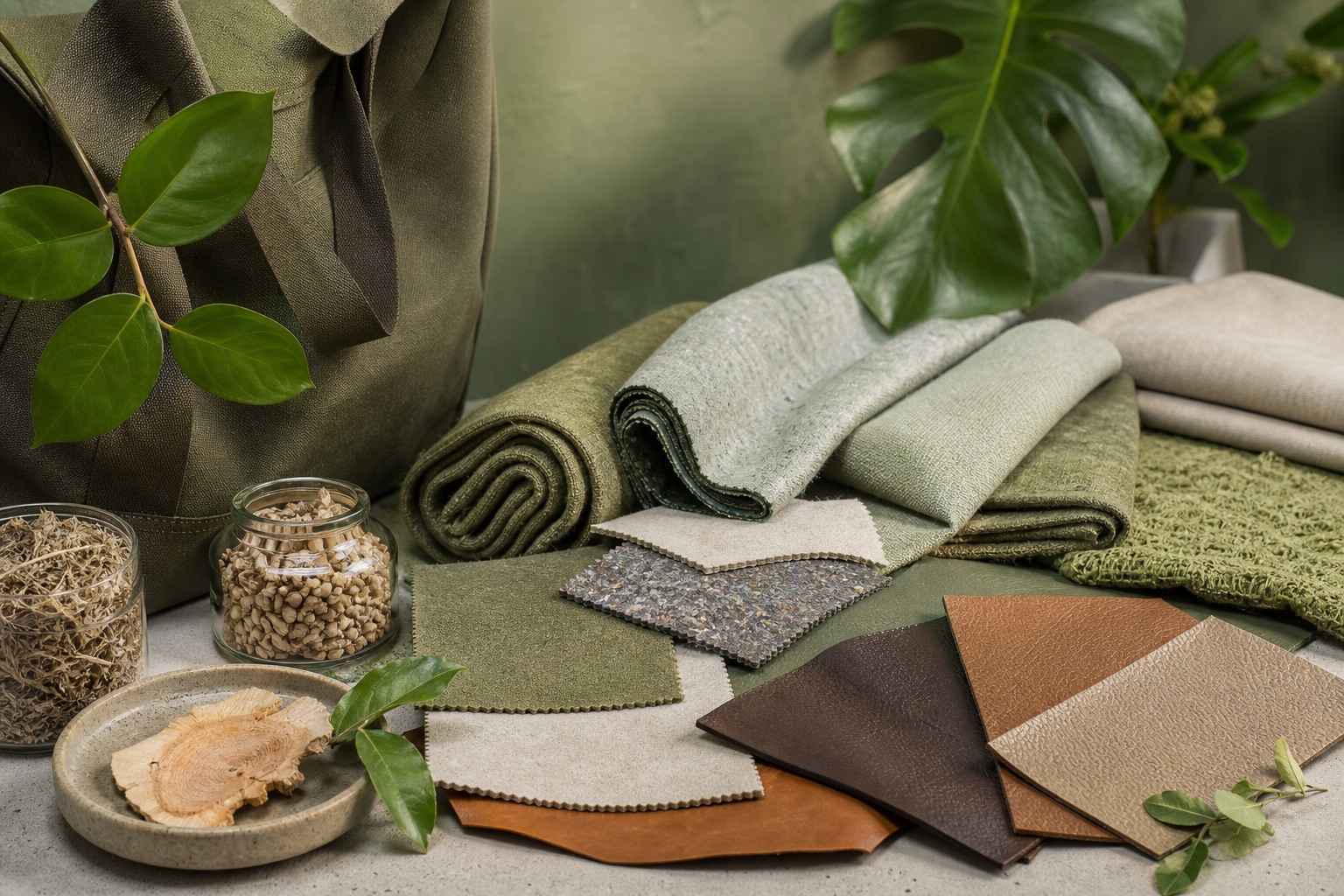
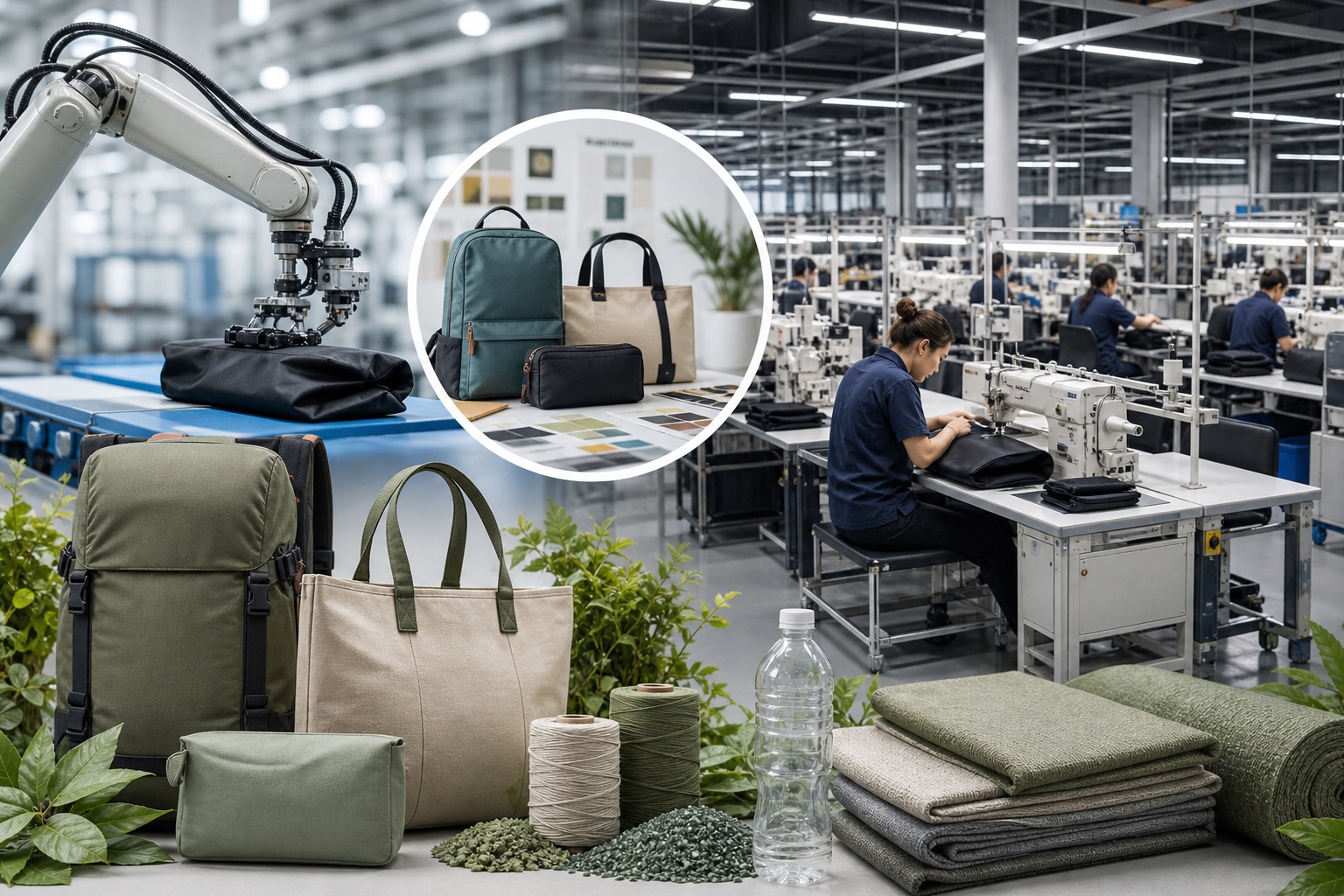
Recycled PET (rPET), organic cotton, bio-based PU, and GRS-certified supply chains are no longer niche requests—they are baseline expectations for many retail and corporate buyers. In 2026, leading bag factories integrate material traceability into quotations, providing batch-level documentation for recycled content and chemical compliance.
Regulatory pressure accelerates this shift. Extended producer responsibility (EPR) schemes in the EU, state-level packaging laws in the US, and corporate ESG reporting requirements push brands to specify verifiable sustainable inputs. Factories that cannot provide third-party certifications or transparent bill-of-materials data lose bids to competitors that can.
What Buyers Should Do Now
- Request GRS or equivalent certification for all recycled fabrics
- Specify restricted substance lists aligned with REACH and Prop 65
- Plan for take-back or recycling programs if your market requires them
- Budget 5–15% material premium for certified sustainable options
Smart Supply Chains and Demand Forecasting
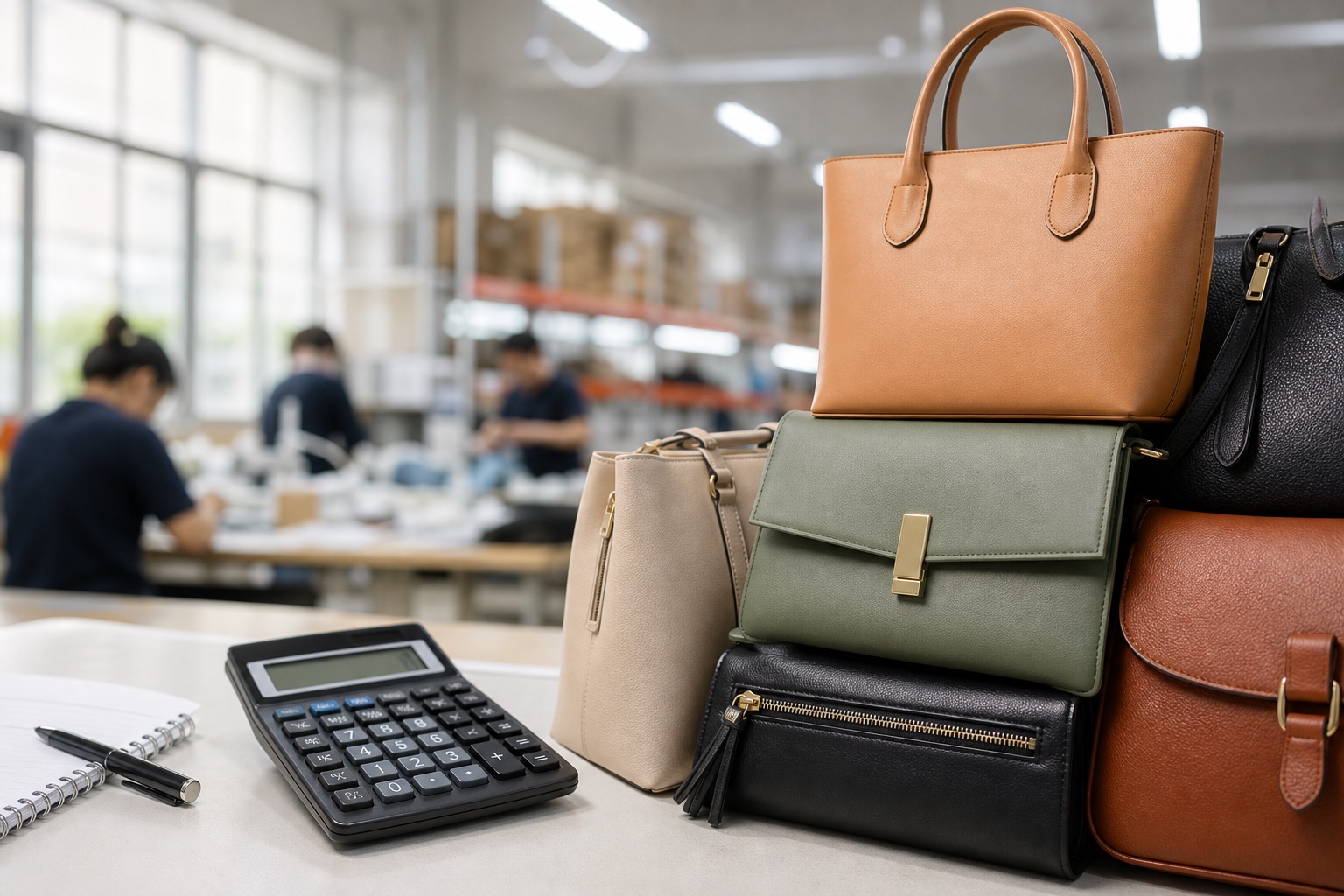
Post-pandemic inventory swings taught the industry a hard lesson: over-ordering ties up cash; under-ordering loses shelf space. In 2026, progressive manufacturers offer vendor-managed inventory (VMI) arrangements, shorter reorder cycles, and shared forecast portals so production planning aligns with actual sell-through.
Digital tools connect ERP systems between buyer and factory. Real-time visibility into raw material stock, WIP status, and shipment tracking reduces the email-chasing that slows traditional sourcing. Buyers who share rolling 90-day forecasts often receive better MOQ flexibility and priority scheduling during peak seasons.
Modular and Multi-Function Designs
Consumers and corporate buyers alike want bags that adapt: detachable pouches, expandable compartments, laptop sleeves that convert to crossbody bags, and modular organizer systems. From a manufacturing standpoint, modular designs can simplify SKU management—one base shell with interchangeable panels or accessories—while offering perceived customization at wholesale scale.
Factories with strong pattern-making and prototyping teams are winning bids on these projects because design complexity requires engineering collaboration, not just sewing capacity. If your line lacks modular options, 2026 is the year to test one hero SKU with interchangeable elements.
Digital Sampling and 3D Prototyping
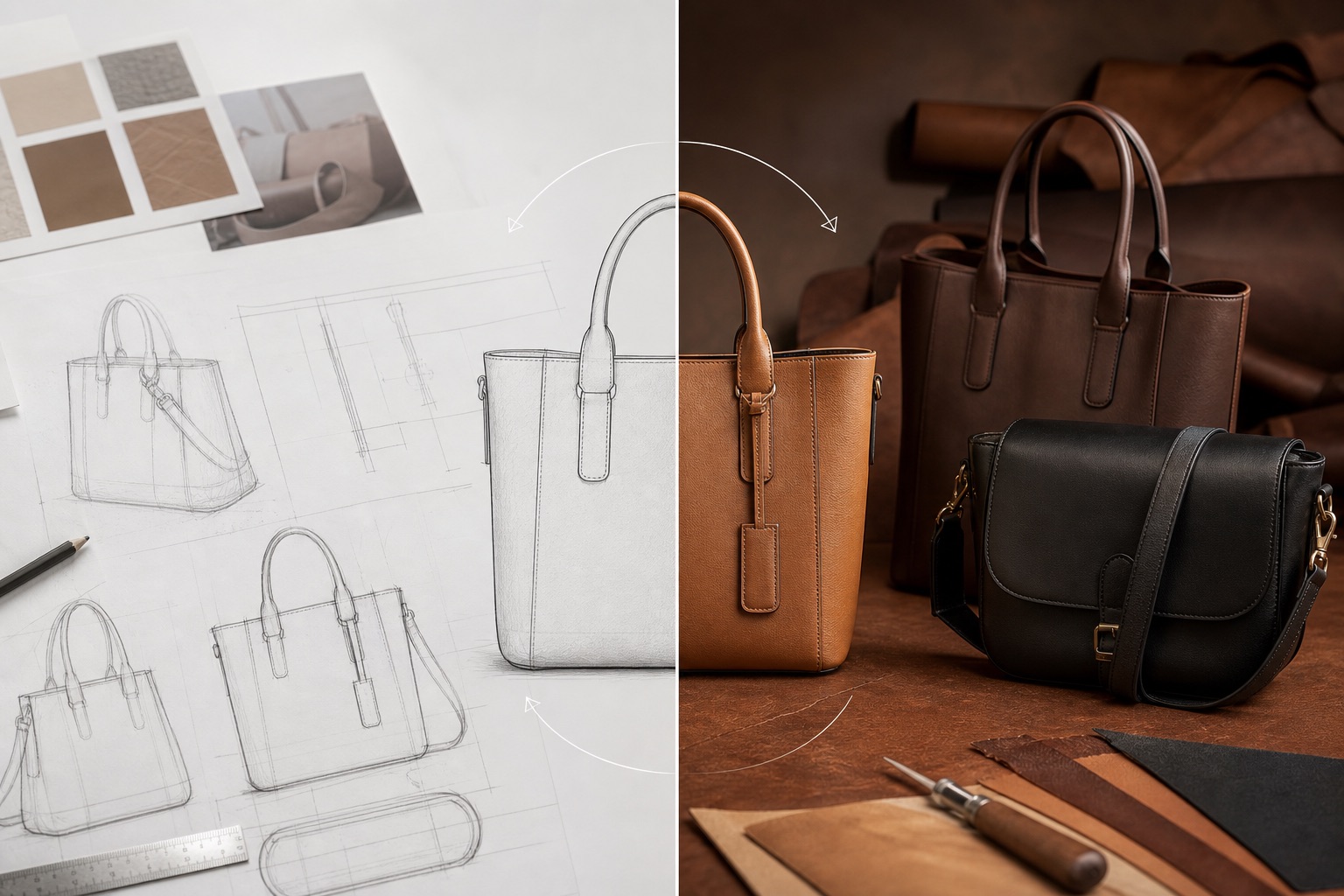
Physical sample rounds take 2–4 weeks per iteration. Digital sampling—using 3D renderings, virtual stitch simulation, and AR try-on previews—cuts pre-production timelines dramatically. Leading bag manufacturers now offer digital mock-ups within 48–72 hours before cutting physical proto samples.
This matters most for brands with frequent seasonal drops or customization programs. Faster approval cycles mean shorter lead times to market and lower sample costs. When evaluating factories, ask whether they provide 3D visuals and how many physical sample rounds they include in standard development fees.
Regional Sourcing and China+1 Strategies
China remains dominant for bag manufacturing scale and cost, but buyers increasingly adopt China+1 strategies—maintaining primary production in China while qualifying backup capacity in Vietnam, Cambodia, or Indonesia. Nearshoring to Mexico or Turkey serves European and North American buyers seeking reduced transit times for replenishment orders.
However, material ecosystems and skilled labor pools still favor China for complex constructions—structured leather goods, technical outdoor packs, and high-volume promotional runs. The trend is diversification for risk management, not wholesale relocation.
Trend Summary: 2026 at a Glance
| Trend | Buyer Impact | Factory Readiness Signal |
|---|---|---|
| Certified sustainable materials | Higher material cost, stronger retail appeal | GRS/OEKO-TEX docs on request |
| Shared forecasting & VMI | Lower stockouts, better MOQ terms | ERP integration, rolling schedule updates |
| Modular product design | Fewer SKUs, higher perceived value | In-house pattern engineering team |
| Digital sampling | Faster time-to-market, lower dev cost | 3D renders within 72 hours |
| China+1 sourcing | Supply chain resilience | Multi-country production or partners |
Preparing Your 2026 Sourcing Strategy
Trends only create advantage when acted upon. Audit your current supplier against the readiness signals above. Identify one or two gaps—perhaps missing recycled material options or no digital sampling—and address them in your next RFQ. Brands that align product development with manufacturing capability in 2026 will ship faster, comply easier, and win shelf space from competitors still sourcing the 2020 way.
The bag industry rewards buyers who treat manufacturing partners as co-developers, not order takers. Share your roadmap, ask factories what they see across their client base, and build collections that reflect where the market is heading—not where it has been.