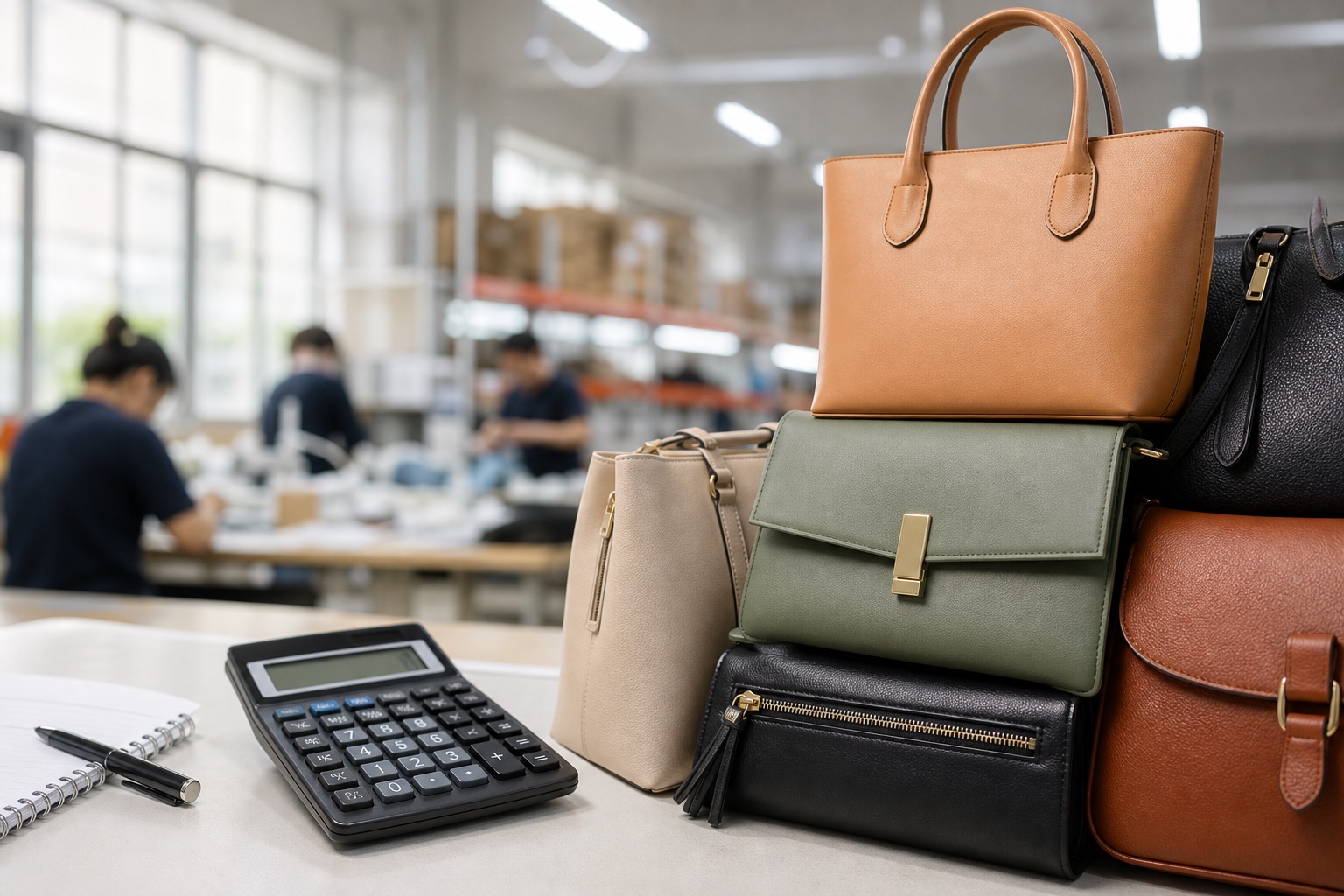
Shipping is where many first-time bag importers lose margin they saved on factory pricing. Soft goods like bags are lightweight but bulky—freight cost per unit can exceed production cost on low-density products like tote bags and pillows. Understanding Incoterms, freight modes, and landed cost calculation before you sign a purchase order protects your profitability and prevents surprises at customs.
This guide explains the logistics decisions B2B bag buyers face after production: choosing FOB or CIF terms, planning carton specifications, selecting sea or air freight, and clearing customs efficiently in your destination market.
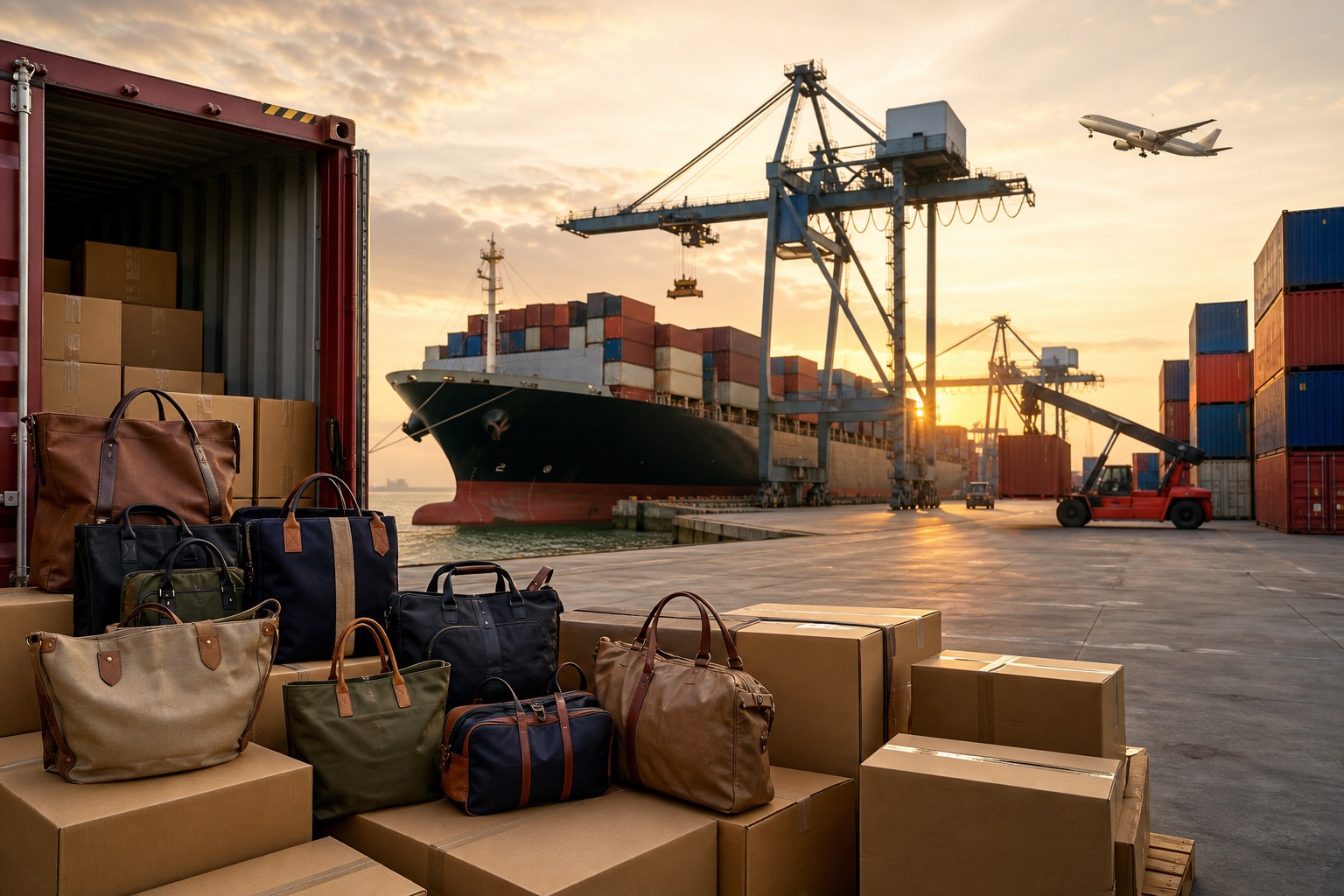
FOB vs CIF: Which Incoterm Should You Use?
Incoterms define who pays for transport, insurance, and risk transfer between seller and buyer. For bag orders from China, FOB and CIF are the two most common terms—and the choice significantly affects your control and cost visibility.
| Incoterm | Seller Responsibility | Buyer Responsibility | Best For |
|---|---|---|---|
| FOB (Free on Board) | Deliver goods to port, export clearance | Freight, insurance, import clearance, delivery | Experienced importers with freight forwarders |
| CIF (Cost, Insurance, Freight) | Freight + insurance to destination port | Import clearance, duties, final delivery | First-time buyers wanting simplified quoting |
| EXW (Ex Works) | Make goods available at factory | All transport from factory door | Buyers with strong local China logistics |
| DDP (Delivered Duty Paid) | Everything including import duties | Receive goods at warehouse door | Hands-off buyers accepting higher all-in cost |
Why FOB Is Standard for Bag Importers
FOB (named port, e.g., FOB Shenzhen or FOB Ningbo) is the default for experienced B2B bag buyers. The factory quotes product cost plus delivery to the export port. You arrange sea or air freight through your freight forwarder, choose the carrier, and control insurance coverage.
FOB gives you transparency: you see exactly what you pay for production versus logistics. Factories cannot markup freight—a common practice when they quote CIF to inexperienced buyers. FOB also lets you consolidate shipments from multiple suppliers into one container, reducing per-unit freight cost.
When CIF Makes Sense
CIF simplifies the process for first-time importers or small orders where hiring a freight forwarder feels disproportionate. The factory arranges shipping to your destination port. However, you lose visibility into freight cost and carrier selection. Factory-quoted CIF rates often include 10–20% markup over direct freight booking.
If you accept CIF, specify the destination port clearly (e.g., CIF Los Angeles, CIF Rotterdam) and request the bill of lading and freight invoice breakdown before shipment. Transition to FOB as your import volume grows.
Sea Freight vs Air Freight for Bags
Sea Freight (FCL and LCL)
Sea freight is the economical choice for bag orders above 5–8 CBM (cubic meters). Bags compress reasonably well but still occupy volume—a container of tote bags may weigh far less than the 20-ton weight limit, meaning you pay for space, not weight.
- FCL (Full Container Load): 20GP (~28 CBM) or 40HQ (~68 CBM). Best for orders above 8–10 CBM where you fill at least half a container.
- LCL (Less than Container Load): Shared container space billed per CBM. Suitable for 1–8 CBM shipments but costs 30–50% more per CBM than FCL.
Typical transit times: 14–18 days China to US West Coast, 28–35 days to US East Coast via Panama, 25–35 days to Northern Europe. Add 5–10 days for customs clearance and inland delivery.
Air Freight
Air freight suits urgent reorders, sample shipments, or high-value small batches (premium leather goods). Cost is $4–$8+ per kg depending on season and route—often 5–10x sea freight on a per-unit basis for bags. Use air only when speed justifies the premium or when testing a new SKU before committing to a sea freight bulk order.
Carton Planning and CBM Calculation
Carton dimensions directly affect freight cost. Work with your factory to optimize packing before production:
- Request carton size options during quoting—smaller cartons mean more units per CBM
- Standard master carton for backpacks: 60×40×50 cm; for flat-folded totes: 60×40×30 cm
- Confirm units per carton (UPC) and calculate total CBM: (L × W × H in meters) × number of cartons
- Specify maximum carton weight (usually 15–20 kg) to comply with warehouse handling limits
| Product Type | Typical UPC | Carton Size (cm) | CBM per Carton |
|---|---|---|---|
| Folded tote bags | 50–100 pcs | 60 × 40 × 30 | 0.072 |
| Backpacks (flat pack) | 20–30 pcs | 60 × 40 × 50 | 0.120 |
| Structured handbags | 10–20 pcs | 50 × 40 × 40 | 0.080 |
| Travel luggage | 4–8 pcs | 70 × 50 × 60 | 0.210 |
Include CBM and carton count in your purchase order. Freight forwarders quote based on these figures. Discrepancies between quoted and actual CBM at port cause invoice disputes and delayed shipments.
Calculating Landed Cost
Landed cost is the true cost of each bag at your warehouse—not just the FOB factory price. Build this calculation into every sourcing decision:
- FOB product cost: Unit price × quantity
- Sea or air freight: Forwarder quote based on CBM or weight
- Cargo insurance: Typically 0.3–0.5% of cargo value
- Import duties: HS code tariff rate × customs value (FOB + freight for CIF valuation)
- Customs broker fee: $100–$250 per entry (US); varies by country
- Inland delivery: Port to warehouse trucking
- Inspection and handling: PSI cost, unloading, warehousing
Example: 5,000 tote bags at $1.50 FOB = $7,500 product cost. Sea freight at $1,200, duties at 17.6% (HS 4202.92), broker and trucking at $400 = total landed roughly $10,500, or $2.10 per unit. That $0.60 per unit logistics cost is material to your wholesale margin.
Customs Classification and HS Codes for Bags
Bags are classified under HS Chapter 42. Common codes for B2B importers:
- 4202.12: Trunks, suitcases, briefcases (structured luggage)
- 4202.22: Handbags with outer surface of plastic or textile
- 4202.92: Other bags with outer surface of textile materials (most totes, backpacks)
- 4202.99: Other bags (catch-all for mixed-material items)
US duty rates on textile bags range from 6.5% to 20% depending on material and construction. Verify the correct HS code with your customs broker before ordering—misclassification triggers audits and penalty duties.
Documentation and Freight Forwarders
Before goods depart, confirm your factory provides a commercial invoice, packing list, and bill of lading (or air waybill). Product descriptions must match HS classification—use specific terms like "polyester backpacks with PU trim" rather than vague labels like "bags."
A reliable freight forwarder books cargo, prepares customs entries, and tracks shipments. Request quotes from 2–3 forwarders and ask about LCL consolidation from Shenzhen, Ningbo, and Shanghai.
Planning Logistics Before You Order
Calculate landed cost during sourcing, not after production. Ask factories for estimated CBM and carton specs in the initial quote. Choose FOB once you have a forwarder relationship. Build 7–10 days buffer beyond stated transit time for customs and inland delivery. Logistics done right keeps your bag program profitable from the first container to the tenth.