Private-label bag programs live or die on branding. Your logo, color palette, and packaging are what transform a factory-standard tote or backpack into your product—not the factory's. For B2B buyers launching a wholesale line, corporate gift program, or retail collection, understanding decoration methods and packaging options upfront prevents costly redesigns and MOQ surprises mid-production.
This guide covers the most effective logo application techniques for bags, retail packaging components, file preparation standards, and how branding choices affect cost and lead time on bulk orders from China.
Logo Application Methods Compared
Bag decoration methods differ in durability, cost, MOQ, and visual impact. Choose based on your material, design complexity, and price tier.
| Method | Best Materials | MOQ Impact | Cost Tier |
|---|---|---|---|
| Screen printing | Canvas, cotton, nylon, non-woven | Low (500+ units) | Low |
| Heat transfer / HTV | Polyester, nylon, PU leather | Low–Medium | Low–Mid |
| Embroidery | Canvas, twill, heavy nylon, caps | Medium (setup fee per design) | Mid |
| Deboss / emboss | PU leather, genuine leather | High (custom plate required) | Mid–High |
| Metal logo plate | Leather bags, premium backpacks | High (custom mold) | High |
| Woven / printed label | All bag types (interior or exterior) | Medium (label MOQ ~1,000 pcs) | Low–Mid |
Screen Printing for Promotional and Retail Totes
Screen printing remains the most cost-effective method for large logo areas on canvas totes, drawstring bags, and promotional non-woven carriers. Each color requires a separate screen, so single-color or two-color designs keep costs down. Full-color CMYK screen printing is possible but adds setup cost and color-matching complexity.
Specify print size, placement (centered on one side vs. all-over), and ink type. Water-based inks suit eco branding; plastisol inks offer opacity on dark fabrics. Request a print strike-off on actual production material before bulk printing—colors look different on 12 oz natural canvas versus 600D black nylon.
Heat Transfer and Digital Print for Complex Designs
Heat transfer vinyl (HTV) and sublimation transfers handle gradients, photographic images, and fine detail that screen printing cannot. They work well on polyester and nylon bags where direct screen ink adhesion is challenging. Full-color digital heat transfers suit short runs and multi-SKU programs where screen setup costs would be prohibitive.
Quality varies: cheap transfers crack and peel after washing. Specify transfer thickness, wash durability rating (25+ wash cycles for apparel-grade), and adhesion test requirements in your tech pack. For PU leather bags, use heat-transfer films rated for synthetic surfaces—standard HTV may not bond properly.
Embroidery for Premium Brand Positioning
Embroidery conveys quality on polo-style corporate bags, golf pouches, cooler bags, and structured totes. Digitizing your logo into an embroidery file (DST format) is a one-time cost, typically $30–$80 per design depending on stitch count. Complex logos with small text below 5 mm height may not embroider cleanly—simplify or enlarge for production.
Thread color matching uses Pantone-to-thread charts (Madeira, Coats). Approve a sewn-out sample before bulk production. Embroidery adds weight and stiffness to lightweight fabrics; consider backing (tearaway or cutaway stabilizer) for clean results on thin nylon.
Debossing, Metal Plates, and Leather Branding
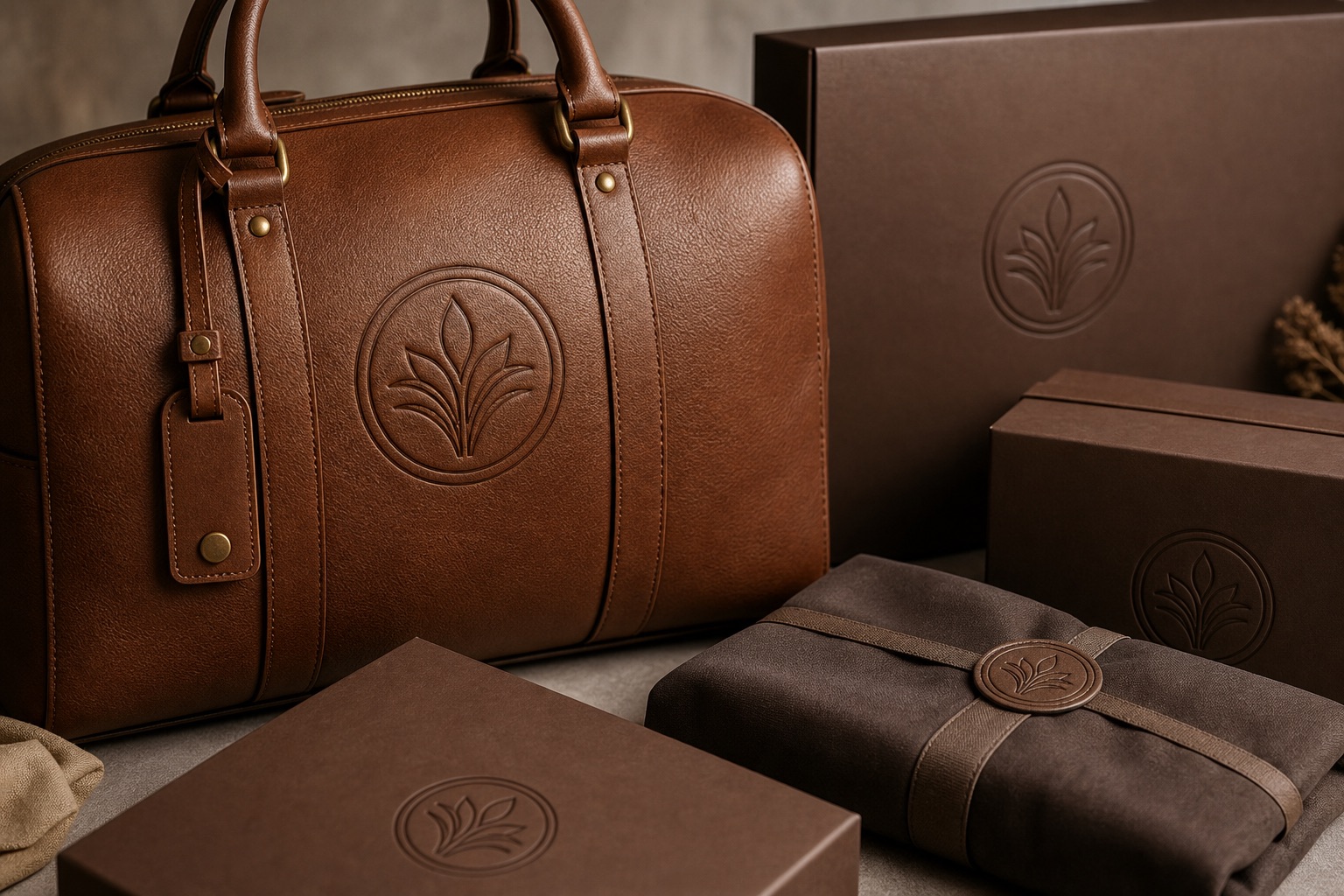
PU and genuine leather bags often use debossed or embossed logos for a subtle premium effect. This requires a custom metal plate (cliché) with a one-time tooling cost of $50–$200 depending on size. Foil stamping in gold or silver adds luxury positioning for handbag and briefcase lines.
Metal logo plates—attached with screws or rivets—define high-end backpack and luggage branding. Custom zinc alloy or brass plates require a mold ($200–$800) but deliver consistent, durable branding across seasons. Plan plate design early; mold lead time adds 10–15 days to sampling.
Interior Branding: Labels, Linings, and Care Tags
Private-label programs should brand the inside as thoroughly as the outside. Standard components include:
- Main label: Woven or printed brand label at interior center back or side seam
- Size/care label: Fiber content, care instructions, country of origin (required for US/EU retail)
- Hang tag: Retail-facing brand story, barcode, price (if applicable)
- Custom lining: Printed lining fabric with repeating logo pattern for premium bags
Woven label MOQs from label suppliers are typically 1,000 pieces per design. Order labels in sync with your bag production schedule—running short on labels delays shipment even when bags are finished.
Retail Packaging Components
Standard Export Packaging
Every bulk bag order includes basic export packaging: individual polybag, silica gel desiccant (for PU/leather in humid climates), and master cartons with shipping marks. This is functional, not retail-ready. Specify polybag thickness (0.04–0.06 mm standard), whether bags are folded or stuffed, and carton dimensions for freight calculation.
Retail-Ready Packaging
Retail-ready packaging elevates unboxing experience and supports sell-through at boutiques and e-commerce. Options include:
- Header card / OPP bag: Bag folded flat with branded cardboard header and self-seal polybag—common for hang-display retail
- Branded gift box: Rigid or folding carton with tissue paper, dust bag, and thank-you card
- Mailer box: Branded shipper box for DTC e-commerce—bag pre-packed inside
| Packaging Level | Components | Added Cost (approx.) | Best For |
|---|---|---|---|
| Basic export | Polybag + master carton | Included in FOB | Wholesale bulk, distributor orders |
| Retail hang | Header card + OPP + barcode sticker | $0.15–$0.40/unit | Boutique, gift shop, trade show |
| Gift box | Box + tissue + dust bag + card | $0.80–$2.50/unit | Premium retail, corporate gifting |
| DTC mailer | Branded shipper + inner wrap | $0.50–$1.50/unit | E-commerce, subscription boxes |
Design File Requirements
Factories and decoration suppliers require production-ready artwork. Submit files in these formats to avoid delays:
- Vector logo: AI, EPS, or PDF with outlined fonts and Pantone color references
- Print files: PDF or AI at 300 DPI at actual print size; include bleed if applicable
- Embroidery: AI or PDF for digitizing; factory returns DST file for approval
- Packaging dielines: AI or PDF with cut, fold, and bleed lines from box supplier template
Never send JPG or PNG logos for production—they cannot scale cleanly. Include a brand guidelines document specifying minimum logo size, clear space, approved color variants, and prohibited treatments.
Compliance Labels and Market Requirements
Retail bags sold in the US must include fiber content labels (FTC Textile Act), country of origin, and care instructions. California Prop 65 warnings may apply to certain materials. EU markets require fiber composition in the official language of the destination country under EU Textile Regulation 1007/2011.
Children's bags trigger additional CPSIA labeling and tracking requirements in the US. Build compliance label content into your tech pack and have legal review before first production. Incorrect labeling can block customs clearance or trigger retailer rejections.
Planning Branding for Your First Private Label Order
Start with one decoration method and one packaging tier. Approve logo application on the pre-production sample with exact placement, size, and color. Add packaging components incrementally as your volume and retail channel requirements grow. Strong branding turns a commodity bag into a product customers remember—and reorder.